Technology plays a critical role in today's classrooms. From student devices and interactive displays to cybersecurity, wireless networks, and digital learning platforms, schools rely on technology every day to support teaching and learning.
Yet many schools find themselves making technology decisions reactively rather than strategically.
A server fails unexpectedly.
A wireless network struggles to keep up with demand.
Student devices reach end of life all at once.
A cybersecurity concern forces an unplanned expense.
Before long, technology investments become a series of urgent purchases rather than part of a long-term plan.
At IT for Education, we believe technology should never drive a school's mission. Instead, technology should support it.
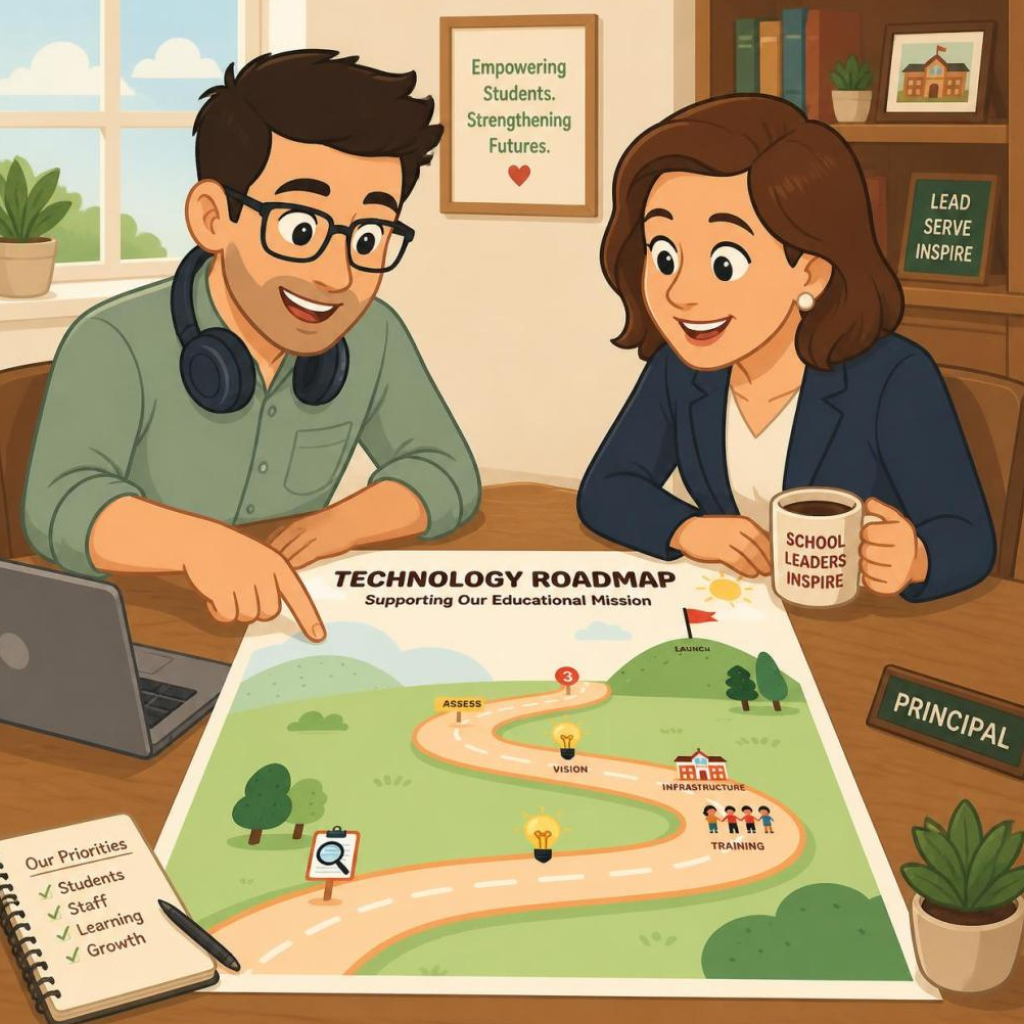
That's why every school should have a technology roadmap.
What Is a Technology Roadmap?
A technology roadmap is a strategic plan that helps school leaders align technology decisions with educational goals, operational needs, and budget realities.
Rather than asking:
"What technology should we buy next?"
A roadmap helps schools ask:
"What technology investments will best support our students, teachers, and mission over the next several years?"
The difference is significant.
One approach reacts to problems.
The other proactively prepares for the future.
Why Many Schools Struggle With Technology Planning
Most school leaders didn't enter education to become technology experts.
Their focus is rightfully on students, teachers, curriculum, culture, and academic outcomes.
As technology continues to evolve, it can become difficult to determine:
- What should be replaced and when
- Which projects deserve priority
- How much should be budgeted for future needs
- Which technologies provide meaningful value
- How to balance innovation with financial responsibility
Without a clear plan, technology decisions often happen during moments of urgency when options are limited and timelines are compressed.
This can lead to unexpected expenses, inconsistent systems, and frustration among staff and students.
Start With Your Educational Mission
The most effective technology roadmaps begin with a simple question:
What are we trying to accomplish as a school?
Technology should never be purchased simply because it's new.
Every investment should support a larger educational objective.
For example:
If a school wants to improve classroom engagement, interactive classroom technology and reliable wireless infrastructure may become priorities.
If personalized learning is a goal, student devices and digital learning platforms may require additional investment.
If operational efficiency is a concern, administrative systems and automation tools may deserve attention.
When technology decisions are tied directly to educational outcomes, it becomes easier to prioritize investments and justify budget decisions.
Assess Your Current Technology Environment
Before planning where you're going, it's important to understand where you are today.
A technology assessment should evaluate key areas including:
Network Infrastructure
Can your wireless network reliably support students, staff, and classroom technology?
Are switches, firewalls, and access points approaching end of life?
Student and Staff Devices
How old are current devices?
Are replacement cycles documented and budgeted?
Do teachers have the tools they need to effectively support instruction?
Cybersecurity
Are accounts protected with multi-factor authentication?
Are backups tested regularly?
Are security policies and training programs in place?
Classroom Technology
Are classroom tools being actively used and supporting instruction?
Do teachers receive adequate training and support?
Operational Systems
Are communication, collaboration, and administrative systems helping staff work efficiently?
Understanding your current environment provides the foundation for making informed decisions about future investments.
Build a Multi-Year Vision
One of the biggest mistakes schools make is planning only one year at a time.
Technology has a lifecycle.
Devices age.
Software evolves.
Infrastructure eventually requires replacement.
A roadmap helps schools look beyond immediate needs and develop a three-to-five-year vision.
For example:
Year One
Address critical infrastructure needs and cybersecurity risks.
Years Two and Three
Implement strategic improvements such as classroom technology upgrades, device refreshes, or operational enhancements.
Years Four and Five
Prepare for larger initiatives, emerging technologies, and long-term modernization projects.
This phased approach allows schools to spread costs over time while avoiding major surprises.
Budget With Confidence
One of the greatest benefits of a technology roadmap is financial predictability.
Unexpected technology expenses can place significant strain on school budgets.
When leaders understand future replacement cycles, infrastructure needs, licensing costs, and strategic initiatives, budgeting becomes much easier.
Instead of reacting to emergencies, schools can proactively allocate resources and make informed decisions.
A roadmap helps answer questions such as:
- What major technology investments are approaching?
- Which systems will require replacement in the next three years?
- What cybersecurity investments should be planned?
- Are there funding opportunities available through programs such as E-Rate?
Better visibility leads to better budgeting.
Technology Maturity Matters
Not every school needs the same technology investments.
A school with aging infrastructure may need to focus on foundational improvements before exploring advanced initiatives.
A school with strong infrastructure may be ready to enhance classroom experiences, strengthen cybersecurity, or implement new learning technologies.
This is why we often discuss Technology Maturity Levels with our clients.
Understanding your current maturity level helps identify which investments will provide the greatest impact while avoiding unnecessary spending.
The goal is not to have the most technology.
The goal is to have the right technology.
Make Technology a Strategic Advantage
Technology should not create uncertainty.
It should create opportunity.
When schools develop a clear technology roadmap, they gain greater visibility, better budget control, stronger cybersecurity, improved classroom experiences, and more confidence in their decision-making.
Most importantly, they create an environment where technology consistently supports teaching and learning rather than becoming a distraction from it.
How IT for Education Can Help
At IT for Education, we work exclusively with K-12 schools to help leaders develop practical technology strategies that align with their mission, budget, and long-term goals.
Through technology assessments, Technology Maturity Reviews, infrastructure planning, cybersecurity guidance, and Quarterly Technology Reviews, we help schools move from reactive decision-making to proactive planning.
Because technology should empower educators and students—not leave school leaders guessing what comes next.
Interested in building a technology roadmap for your school? Contact IT for Education to schedule a Technology Readiness Review and begin planning for the future with confidence.