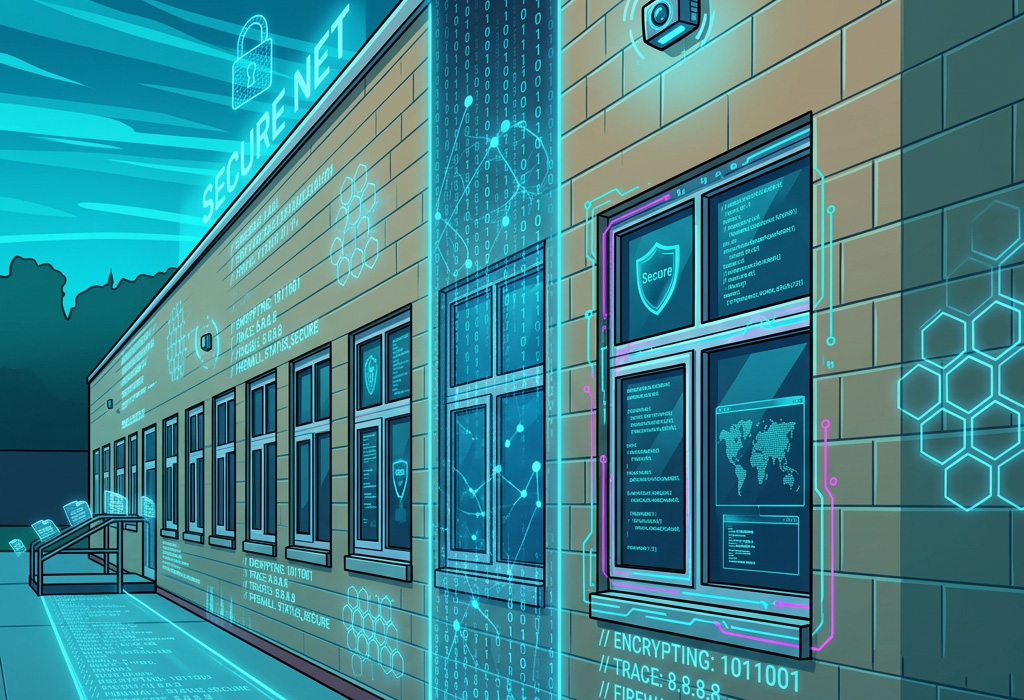
In the final stretch before a new school year, your campus can feel deceptively calm. Classrooms are still being set up, the parking lot is only half full, and the loudest thing in the building might be the air conditioning. But quiet hallways don't mean a quiet network. The servers, Wi-Fi access points, and student information systems that carried your school through last year are still running, still aging, and still carrying the same unpatched vulnerabilities they built up over the summer. Ransomware doesn't wait for a convenient time, and the days right before opening are exactly the window bad actors count on schools not using.
A Legacy of Trust, Built Campus by Campus
Catholic and diocesan schools carry something many other institutions don't: generations of family trust, often built across multiple campuses and decades of shared mission. That legacy comes with real technical complexity. Multi-campus environments frequently mean inconsistent equipment, uneven security policies from one school to the next, and infrastructure that's been patched together year over year rather than planned. Add tuition-funded budgets and diocesan financial oversight, and it's easy to see why cybersecurity upgrades keep getting pushed to “next year.” The problem is that attackers don't check the budget calendar before they target a school.
The Weight You're Already Carrying
You didn't take this role to become your school's de facto IT security officer. Between faith formation, enrollment, staffing, and fundraising, most principals and presidents are already stretched across more responsibilities than any one person should hold. Now add the quiet worry that sits underneath all of it: if a breach exposed student or family records, would your school be able to answer for it: to parents, to the pastor, to the diocese? That uncertainty is exhausting, and it's not something you should have to carry alone.
Technology Should Serve the Mission, Not Threaten It
Your school exists to form students in faith and in knowledge, not to manage firewalls, patch servers, or field ransomware demands. When technology becomes the crisis instead of the tool, it pulls attention and resources away from the mission every single time. The goal isn't more technology. It's technology that quietly does its job so your staff can focus on students, not systems.
A Partner Who Understands Catholic Education
For over 24 years, IT for Education has worked exclusively with K-12 schools, including Catholic and diocesan-affiliated schools across the Tri-County Florida area. We've served Florida schools since 2002, and we understand that a Catholic school's technology needs aren't the same as a corporate office's. We've been recognized with an MSP Titans in Education Award, and we currently support thousands of students, teachers, and administrators across the region. You shouldn't have to become an IT expert to keep your school protected. That's what we're here for.
Three Steps to a Secure Fall Opening
- Schedule a Discovery Meeting: we learn about your school's goals, challenges, and current technology environment.
- Assess and Build a Roadmap: we identify risks and opportunities and build recommendations aligned with your budget and educational mission.
- Support, Secure, and Strategically Guide: we proactively manage your technology and help you plan for what's next.
Two Paths Into the Fall
One path looks like this: your systems are patched and monitored, your staff walks into opening day without a single IT emergency, and your families never have reason to question whether their children's information is safe. The other path looks like a call from your IT vendor in week one of school, a scramble to notify families, and a diocese asking hard questions about how this happened. The difference between the two isn't luck. It's whether the gap gets closed now, while there's still time.